CxO · Pharmaceutical · Specialty Chemical

Vacuum Technology for Pharmaceutical, CxO and Specialty Chemical Processing Reliable, scalable, and precisely controlled vacuum is foundational to process efficiency, product quality, and profitability, from bench-scale R&D through full CDMO and production-scale manufacturing.
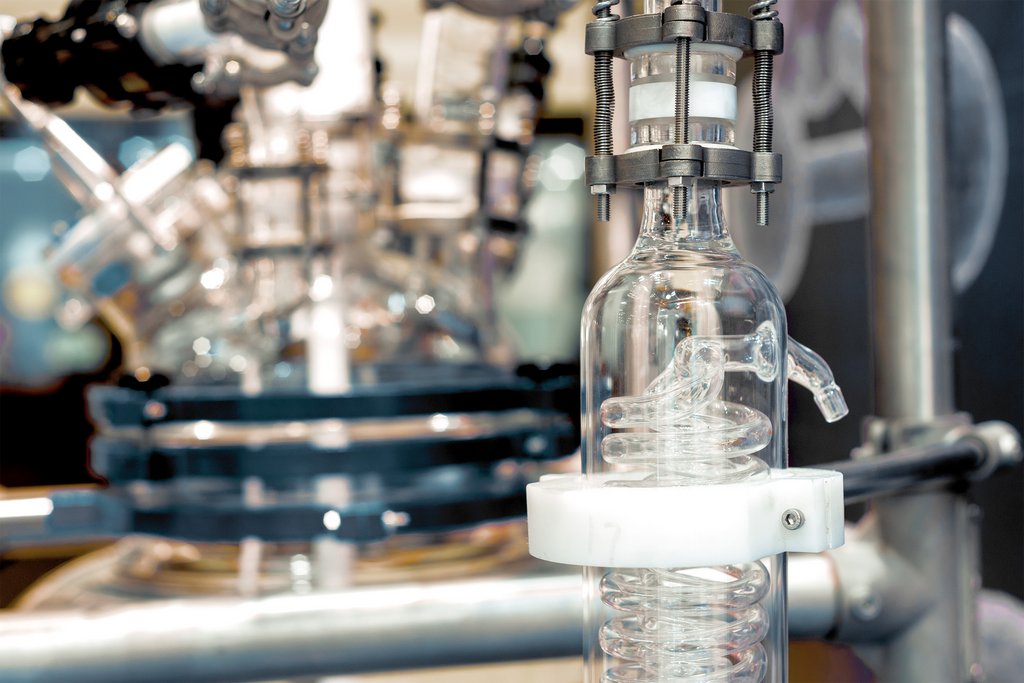
The Role of Vacuum in Process Manufacturing
More Than a Utility - A Core Process Variable in Pharma & Chemical Manufacturing
Vacuum is often one of the primary drivers within a process's total workflow and is used in multiple ways within all CxO, specialty chemical, and pharmaceutical companies. For example, vacuum can be used with reactors to create the conditions required for a specific reaction to occur. Or in fractional distillation to pinpoint and evaporate specific solvents efficiently during refining. Or for efficient degassing of stock and raw materials in process preparation and loading.
Vacuum Pump Performance Touches Every Stage of Your Process
From raw material prep and reaction control, through crude refining and crystallization, to final drying and packaging, vacuum is required at nine or more distinct process stages in a typical API synthesis or specialty chemical workflow.
Poor, undersized, or unreliable vacuum doesn't just affect one step. It cascades. Inefficiency in upstream vacuum performance compounds into poor yield, failed QC, and costly rework in downstream finishing steps.
The right vacuum pump for pharmaceutical manufacturing or chemical processing, properly selected, controlled, and maintained, is one of the highest-leverage improvements a process engineer or decision maker can make.
What Poor Vacuum Really Costs Your Process
Overarching Challenges
Forced-to-fit and underperforming vacuum systems create downstream problems that ripple through your entire pharmaceutical or chemical process affecting efficiency, repeatability, scalability, and profitability.


What to Demand from a Vacuum System in Pharmaceutical & Chemical Processing
Core Capabilities
These five pillars define what effective vacuum technology looks like in a CxO, pharma, or specialty chemical environment — and what separates a process-grade vacuum system from a commodity pump.
Vacuum is only valuable when it's usable. Process-grade vacuum pumps must withstand harsh chemical environments without compromise. Robustness and durability are non-negotiable.
Pumping requirements are never static. Your vacuum system must scale seamlessly from bench-scale R&D through pilot plant to full CDMO and production-scale operation.
Properly sized vacuum pumps matched to their application are critical. Oversized or undersized systems reduce efficiency, increase cost, and compromise API or product purity.
Oil-free, dry-running vacuum pumps eliminate pump-generated contaminants — protecting product integrity and providing a cleaner, safer GMP-compliant work environment
All mechanical systems require maintenance. How quickly, and by whom, vacuum pump maintenance is performed directly determines your scheduled downtime and total cost of ownership.
Vacuum Across the Full API & Specialty Chemical Manufacturing Workflow
Process Workflow
Vacuum is not isolated to a single unit operation. Across a typical crystallized product or API synthesis workflow, vacuum-assisted processes play a critical role at every major processing phase — from raw material preparation through final packaging.


| Key Equipment | Phase | Vacuum Control | |
|---|---|---|---|---|
| 1. Raw Materials Prep & Charging | Filtration & Degassing of stock materials | Vacuum Filtration | Degassing Unit | Upstream | |
| 2. Reaction / Synthesis | Reaction atmosphere control, solvent removal, inert environment | Reactor | Rotary Evaporator | Upstream | |
| 3. Quenching | Vapor removal from off-gassing during quench | Reactor | Quench Tank | Upstream | |
| 4. Work-up / Crude Isolation | Degassing of trapped gases, targeted waste-solvent removal, vacuum filtration | Reactor | Rotary Evaporator Nutsche Filter | SPE / Vac Filtration | Work-up | |
| 5. Concentration | Targeted waste solvent removal for further crude refining | Reactor | Distillation Reactor | Chromatography | SPE | Work-up | |
| 6. Crystallization | Solvent removal & environment control to induce and control crystallization | Reactor | Rotary Evaporator | Work-up | |
| 7. Washing | Vacuum-assisted filtration for final product cleaning | ANFD | Downstream | |
| 8. Drying | Vacuum evaporation to remove residual solvents from final product or API | Vacuum Oven | ANFD | Downstream | |
| 9. Packaging | Air removal for product stabilization, preservation, and GMP-compliant sealing | Lyophilization | Vacuum Sealing | Downstream |
What Pharmaceutical & Chemical Processes Demand from a Vacuum Pump
Technical Requirements
Pharmaceutical manufacturing, CDMO operations, and specialty chemical synthesis environments pose significant technical challenges for vacuum systems. A process-grade vacuum pump must be engineered to handle them all — reliably, safely, and in compliance with GMP standards.
Chemical Resistance
Wetted materials — PTFE, PEEK, and FFKM — resist aggressive, corrosive, and reactive chemical vapors common in pharmaceutical and specialty chemical synthesis, protecting the pump and maintaining process purity.
Wide Pressure Range Performance
From degassing near atmosphere to deep vacuum for API drying and fractional distillation — a pharmaceutical vacuum pump must maintain high pumping speed and stability across the full pressure range.
High Vapor Load Tolerance
Solvent-heavy steps like distillation, concentration, and vacuum drying generate significant vapor loads. Robust vacuum systems handle these without performance degradation or contamination risk.
Explosion Safety — ATEX Compliance
Flammable solvents and VOCs in pharmaceutical and chemical processing create potentially explosive atmospheres. ATEX-rated vacuum pump designs or equivalent safety certifications are essential for safe operation.
Oil-Free, Dry Vacuum Operation
Oil-free vacuum pumps eliminate pump-generated contamination, simplify GMP compliance in pharmaceutical manufacturing, and reduce maintenance burden — no oil changes, no oil disposal, no PFAS risk
Integrated GMP Vacuum Control
Automated, adaptive vacuum control enables reproducible pressure profiles, minimizes product loss from bumping or foaming, and reduces dependency on operator vigilance — a foundational requirement for GMP-compliant processes.
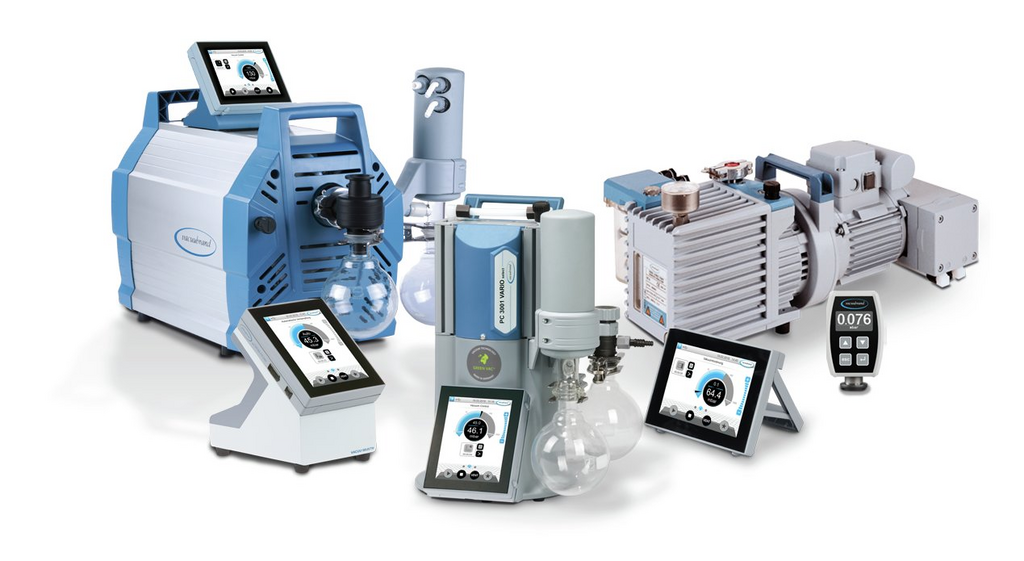
CxO, Pharmaceutical and Specialty Chemical Vacuum Pump Solutions


Intelligent Vacuum Control for Modern GMP & Chemical Manufacturing
Advanced Capabilities
Beyond reliability and performance, leading vacuum systems for pharmaceutical and specialty chemical applications integrate intelligent controls, process automation, and data infrastructure that align with the demands of GMP-regulated, data-driven manufacturing.


Ready to Optimize Your Pharmaceutical or Chemical Vacuum Process?
Talk to a vacuum specialist about your specific application, process scale, and chemistry — or explore our selection guide to find the right vacuum system for your CDMO or production environment.