Reverse Pipetting & Challenging Liquids: How to Pipette Viscous, Volatile and Foaming Samples
Air displacement pipettes are calibrated to water under defined environmental conditions, making them ideal for aqueous solutions. Liquids such as glycerol, ethanol, detergent solutions and serum behave differently, and results can drift from the set volume.
Reverse pipetting achieves higher accuracy with these challenging liquids. You press the plunger to the second stop to aspirate, then dispense only to the first stop. The small excess left in the tip is discarded. Below, you'll find how reverse pipetting works and what to do for each type of challenging liquid.
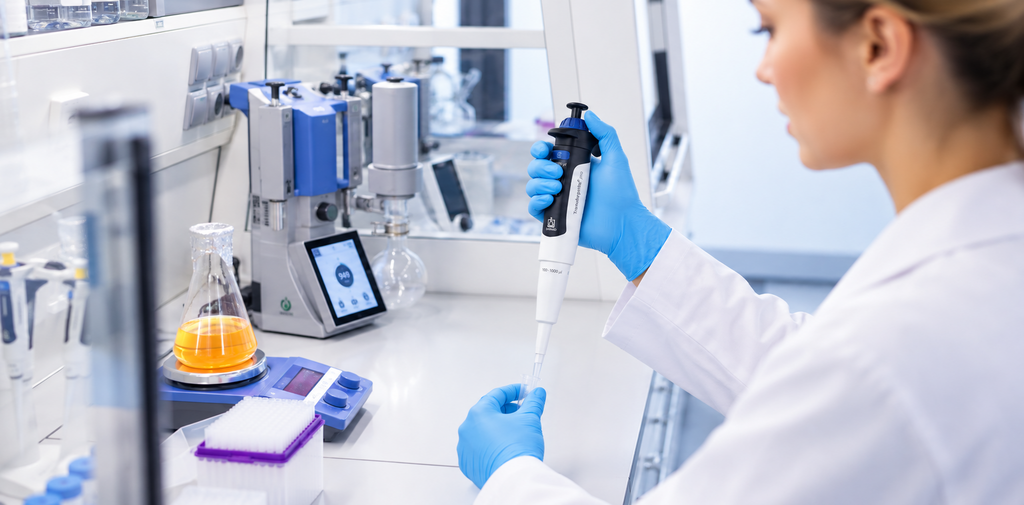
Why Some Liquids Are Difficult to Pipette
An air displacement pipette doesn't touch the liquid directly. A cushion of air between the piston and the sample moves the liquid in and out of the tip. That air cushion is calibrated for water.
When a liquid's density, viscosity, vapor pressure or surface behavior differs from water, the air cushion expands or contracts differently. The same happens when the liquid and the pipette are at different temperatures. The result is too much or too little volume, droplets forming at the tip, or liquid left behind after dispensing.
The six most common liquid properties that affect pipetting accuracy are:


Forward vs. Reverse Pipetting
Forward pipetting is particularly suitable for aqueous solutions and standard applications. When pipetting challenging liquids (e.g., viscous, volatile or foaming), reverse pipetting achieves higher accuracy.
| Forward pipetting | Reverse pipetting | |
|---|---|---|
| Aspirate | Press to the 1st stop, then release | Press to the 2nd stop, then release |
| Dispense | Press to the 1st stop, then the 2nd stop to blow out | Press to the 1st stop only |
| Liquid left in tip | None | A small excess, discarded |
| Best for | Aqueous solutions, buffers, standard applications | Viscous, volatile, foaming, wetting liquids |
| Accuracy with challenging liquids | Lower | Higher |
How to Do Forward Pipetting
- Press the plunger to the first stop.
- Immerse the tip in the liquid and slowly release the plunger to aspirate.
- Place the tip against the vessel wall and press to the first stop to dispense.
- Press to the second stop to blow out the remaining liquid.
For a full walkthrough of basic technique, see how to pipette.

How to Do Reverse Pipetting
- Press the plunger all the way to the second stop.
- Immerse the tip in the liquid and slowly release the plunger. This aspirates the set volume plus a small excess.
- Place the tip against the vessel wall and press only to the first stop to dispense the set volume.
- The excess stays in the tip. Discard it with the tip, or return it to the source container.
Tip: before reverse pipetting, check that the extra volume can be aspirated without liquid touching the pipette shaft or filter.

How to Pipette Challenging Liquids by Type
Each liquid property affects the air cushion differently, so each needs its own approach. The recommendations below apply when using air displacement pipettes.
How to Pipette Viscous Liquids
Viscous liquids like glycerol, serum and oils have high flow resistance. Liquid tends to remain in the tip, which makes precise work difficult.
- Use reverse pipetting.
- Pipette slowly and extend the waiting time, so the liquid can fully enter and leave the tip.
- Use the User Adjustment on the Transferpette® pro to correct for the volume deviation
How to Pipette Volatile Liquids
Volatile liquids like ethanol and acetone evaporate into the air cushion. The air cushion expands, which pushes liquid out and leads to droplet formation at the tip.
- Pre-wet the air cushion at least 5 times by aspirating and dispensing the liquid. This saturates the air cushion with vapor.
- Use reverse pipetting.
- Use the User Adjustment after sufficient pre-wetting.
Not sure how volatile your solvent is? Check out our solvent boiling point chart.
How to Pipette Foaming Liquids
Foaming liquids such as detergent solutions and serum form bubbles during aspiration and dispensing, which makes accurate pipetting difficult.
- Use reverse pipetting.
- Pipette slowly.
- Use filter tips to protect the pipette against contamination.
How to Pipette High- or Low-Density Liquids
A density that differs from that of water influences the expansion of the air cushion, and with it the volume of liquid delivered.
- Use the User Adjustment on the Transferpette® pro to compensate for the deviation.
How to Pipette Liquids That Wet Surfaces
Some liquids, including detergent-containing solutions, cling to the inner surface of the tip. This leads to difficult or incomplete fluid release.
- Use high-quality pipette tips.
- Use reverse pipetting.
How to Pipette at Different Temperatures
Temperature differences between the liquid, the pipette and the environment can change the air cushion. The result is inaccurate pipetting, for example with samples taken from ice or an incubator.
- If possible, conduct temperature equalization by letting the liquid and pipette reach the same temperature before pipetting.
- If that's not possible:
- Use the User Adjustment.
- Do not pre-wet the air cushion.
- Change the tip after each pipetting step.
Quick Reference: Challenging Liquids at a Glance
Use this chart to choose the right technique for your liquid.
| Liquid property | Examples | Reverse pipetting | Pipette slowly | Pre-wet | User Adjustment | Tips | Temperature equalization |
|---|---|---|---|---|---|---|---|
| Viscous | Glycerol, serum, oils | ✓ | ✓ (extend waiting time) | - | - | ✓ | - |
| Volatile | Ethanol, acetone | ✓ | - | ✓ (at least 5×) | ✓ (after pre-wetting) | - | - |
| Foaming | Detergents, serum | ✓ | ✓ | - | - | Filter tips | - |
| High/low density | Salt solutions, solvents | - | - | ✓ | - | - | - |
| Wetting surfaces | Detergent solutions | ✓ | - | - | - | Quality tips | - |
| Temperature differences | Samples from ice or an incubator | - | - | Do not pre-wet | ✓ (if equalization isn't possible) | Change after each step | ✓ (if possible) |
*User Adjustment is a function of the Transferpette® pro. The adjustment value must be selected according to the pipetting technique (forward or reverse).
Adjusting Your Pipette for Different Liquids: Transferpette® pro User Adjustment
The User Adjustment on the Transferpette® pro is quick, reversible and needs no tools. It temporarily adjusts the pipette to:
- Challenging liquid properties
- Temperature differences
- Special pipette tips
How the User Adjustment works:
- Determine the volume deviation.
- Determine the adjustment value once using our calculation tool.
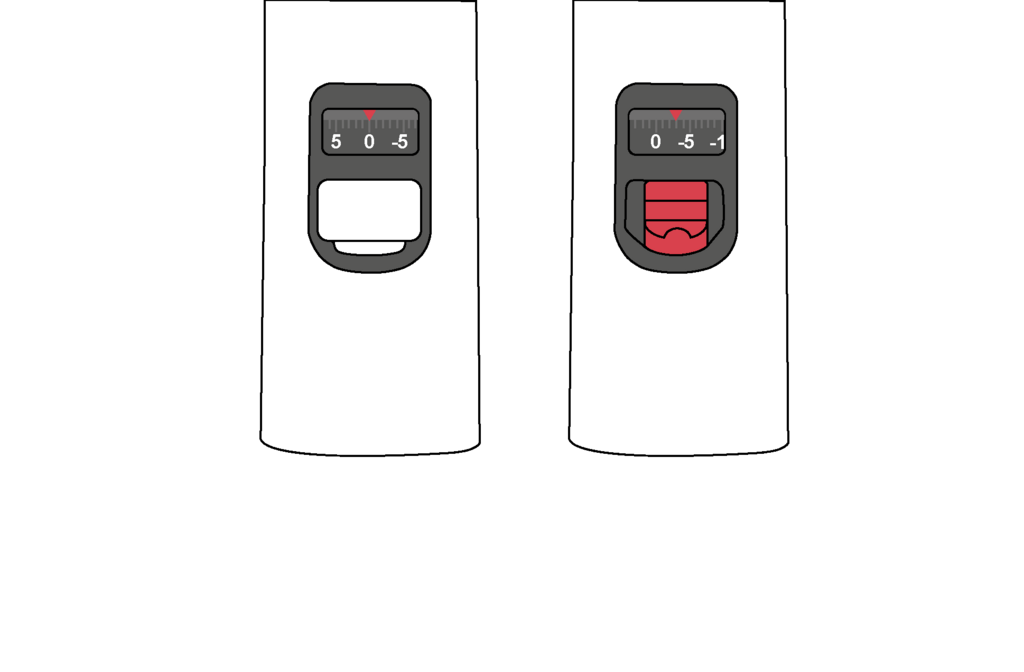
- Set the adjustment value. Remove the cover, pull the red slider down and hold it while turning the volume adjustment wheel. Then return the slider and replace the cover.
The adjustment value must match the pipetting technique you use (forward or reverse).
Air Displacement vs. Positive Displacement Pipettes
Air displacement pipettes are calibrated to water under defined environmental conditions; they are ideal for aqueous solutions. For optimal results with non-aqueous liquids, positive displacement pipettes or multi-dispensers are recommended.
| Air displacement pipette | Positive displacement pipette | |
|---|---|---|
| How it works; | An air cushion between the piston and the liquid moves the sample | The piston is in direct contact with the liquid; no air cushion |
| Best for | Aqueous solutions, buffers, standard applications | Viscous, volatile, dense or foaming liquids |
| Affected by liquid properties | Yes: density, vapor pressure, viscosity and temperature change the air cushion | Minimally, because there is no air cushion to expand or contract |
| BRAND® options | Transferpette® S / pro | Transferpettor, HandyStep® S/touch repeating pipettes |
If you pipette challenging liquids often, a positive displacement pipette removes the air cushion problem entirely. For occasional use, the reverse pipetting and User Adjustment techniques above will improve results with an air displacement pipette.
Frequently Asked Questions
Reverse pipetting is a technique where you press the plunger to the second stop to aspirate, then dispense only to the first stop. A small excess of liquid stays in the tip and is discarded. It gives higher accuracy than forward pipetting with viscous, volatile, foaming and surface-wetting liquids.
For challenging liquids, yes. The excess liquid in the tip compensates for film left on the tip wall and for droplet formation, so the dispensed volume is closer to the set volume. For aqueous solutions, forward pipetting is the standard method and works well.
Use it for viscous liquids (e.g., glycerol, serum), volatile liquids (e.g., ethanol, acetone), foaming liquids (e.g., detergent solutions) and liquids that wet the tip surface. First check that the extra volume can be aspirated without liquid reaching the pipette shaft or filter.
Use reverse pipetting, pipette slowly and extend the waiting time at each step so the liquid can fully enter and leave the tip. On a Transferpette® pro, the User Adjustment can also correct for any remaining volume deviation. For frequent work with viscous liquids, consider a positive displacement pipette.
Pre-wet the air cushion at least 5 times before pipetting volatile liquids such as ethanol or acetone. This saturates the air cushion with vapor and reduces droplet formation. Don't pre-wet when the liquid and pipette are at different temperatures.
Need Help With a Challenging Application?
Explore our full range of liquid handing tools designed for precision and ease of use or contact BRANDTECH Scientific at 888-522-2726 or….
