5 Tips for Buying a Lab Vacuum Pump
Vacuum pumps are used throughout labs for a variety of applications. Because of this broad array of uses, finding the pump best suited to your needs can be a challenge. Following these 5 tips will help you find the right pump to support your work and meet your budget. If you’ve already determined your application requirements, you can go directly to our vacuum pump selection guide.
For a one-page summary of these tips to share with your lab manager or purchasing team, download our PDF.
When Buying a Lab Vacuum, Make Sure to:
- Consider your application
- Compare performance specifications
- Factor in maintenance
- Evaluate pump design
- Consider the total cost of ownership
Tip 1: Consider Your Application
Make sure that you pick a pump that provides vacuum in the same range as the sufficient vacuum for your application. Both too much vacuum and too little vacuum can cause problems.
Start by defining the vacuum level your process requires, then select a pump designed to work in that range. Applications that move liquids, such as filtration and aspiration, require only rough vacuum, while evaporation, drying and distillation may require deeper vacuum depending on solvent boiling points.
See which type of vacuum pump reaches the vacuum depth your application needs.

Tip 2: Compare Performance Specifications
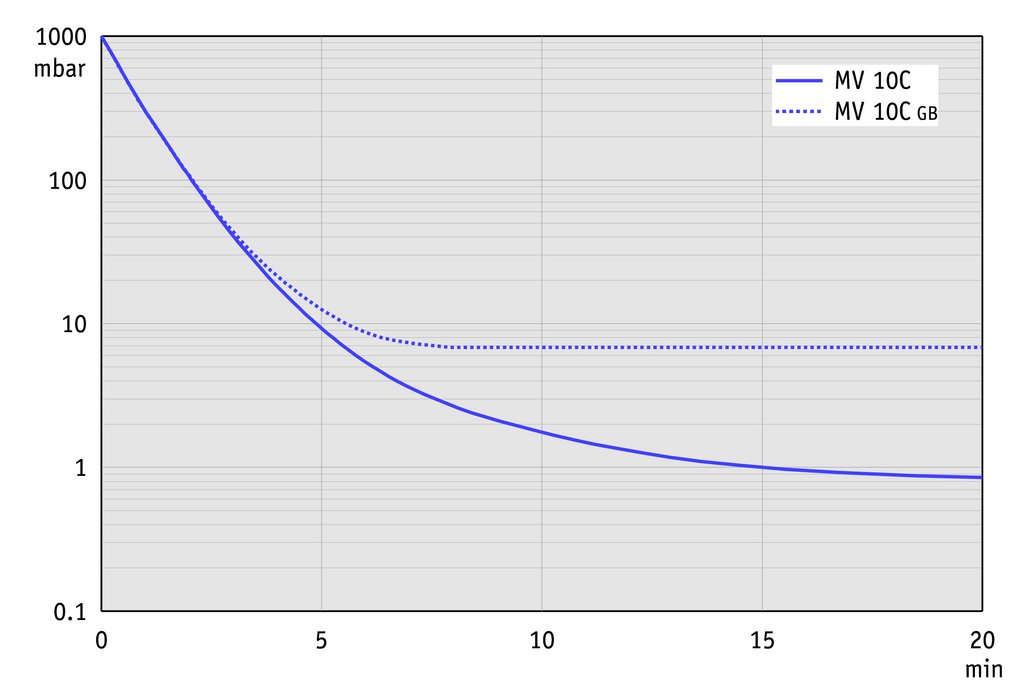
Vacuum pumps are specified by their ultimate vacuum and maximum flow rate, but what really matters is the flow rate at the working vacuum required. Look at published flow curves, or talk with manufacturers, to make sure that the pump you’re considering is strong enough.
What Is Ultimate Vacuum?
Ultimate vacuum is the lowest pressure a vacuum pump can reach under ideal conditions, typically listed in mbar, torr, or kPa. The lower the value, the deeper the vacuum. Ultimate vacuum is a useful first check: a pump with an ultimate vacuum above the pressure your process requires will not reach your working vacuum for example.
Ultimate vacuum, however, only indicates how deep a pump can go. It does not indicate how the pump performs at the pressure you will actually be working at.
Why Flow Rate at Working Vacuum Matters
A pumps rated flow rate is always it's maximum flow rate which typically occurs near atmospheric pressure. As a pump approaches its ultimate vacuum, its flow rate decreases. Two pumps with similar maximum flow rates can perform very differently at the vacuum level your application requires.
A pumping curve shows how pumping speed changes across the pumps vacuum range. Locate your working vacuum on the curve and check the flow rate at that point. If a flow curve is not published, contact the manufacturer for performance data.
To compare specifications listed in different units, use our vacuum conversion calculator to convert between mbar, Torr, and other common units.
Tip 3: Factor In Maintenance
Some vacuum pumps require more maintenance than others. Certain pumps need to be sent out to specially-trained technicians, while others can be serviced by lab personnel. Make sure you factor in maintenance, any consumables such as oil, and service considerations like these when selecting your new pump.
Ask how often the pump requires service, what that service involves and who can perform it. Many labs prefer oil-free diaphragm pumps, which eliminate oil changes and reduce routine maintenance. To keep your pump performing reliably, always follow the 7 golden rules of vacuum pump maintenance.
Tip 4: Evaluate Pump Design
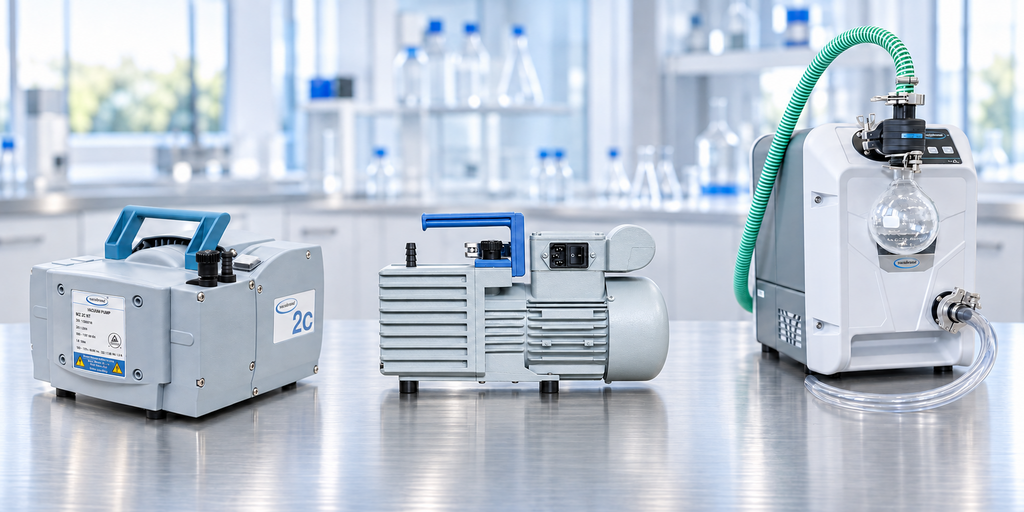
Before you buy, think about details like how loud the pump will be and how the noise will impact the lab environment. Consider pump dimensions: can it sit on the bench or fit inside a cabinet? Look at the solvents you will be using and consider if the pump is compatible with those chemicals.
- Chemical compatibility: Corrosive vapors and aggressive solvents can damage pumps that are not designed for them. Chemistry diaphragm pumps are built for these applications.
- Noise: Pumps that run for extended periods at the bench affect everyone working nearby.
- Footprint: Confirm the bench or cabinet space available for the pump.
Compare diaphragm, rotary vane and screw pumps for chemical resistance, and refer to our diaphragm pump chemical compatibility chart below against the solvents you use.
Tip 5: Consider the Total Cost of Ownership
When weighing the cost of the pump, don’t just look at the upfront cost alone. Consider operating costs like consumables (e.g., oil) maintenance, and down loss of productivity due to maintenance.
The total cost of owning a lab vacuum pump includes:
- Purchase price: the upfront cost of the pump
- Consumables: oil and other parts that require regular replacement
- Maintenance: the frequency and cost of service
- Downtime: lost productivity while the pump is unavailable
A pump with a lower purchase price can cost more over its working life than one with lower operating and maintenance costs.
Need Vacuum at Multiple Benches?
If you are equipping several workstations, a VACUU·LAN® Lab Vacuum System allows a single pump to supply vacuum to multiple users, this can also be configured to avoid copper pipe and supply vacuum to a complete floor or a full building. For a smaller setup, the VACUU·LAN® Mini-Network adds three vacuum ports that mount to a wall or lab frame.
Find the Right Pump for Your Lab
With these tips in mind, you’ll be able to find the right pump for your work. If you’re still not sure which pump is right for you, use our interactive vacuum pump selection guide, or reach out to talk with our team of experts who can find exactly the pump you need.
Frequently Asked Questions
What is ultimate vacuum?
Ultimate vacuum is the deepest vacuum a vacuum pump can reach under ideal conditions, usually listed in mbar, torr, or kPa. It indicates how deep a pump can pull, but not how effectively it removes gas and vapor at the pressure your application actually runs at. For that, look at the flow rate at your working vacuum.
Is a vacuum pump with deeper vacuum always better?
No. The best pump provides the range your application requires. Too much, or too little, vacuum can cause problems, so match the pump to the work rather than choosing the deepest vacuum available.
What does a lab vacuum pump really cost to own?
The purchase price is only part of the cost. Total cost of ownership also includes, consumables such as oil, the frequency and cost of maintenance, the cost of downtime when the pump is unavailable.